
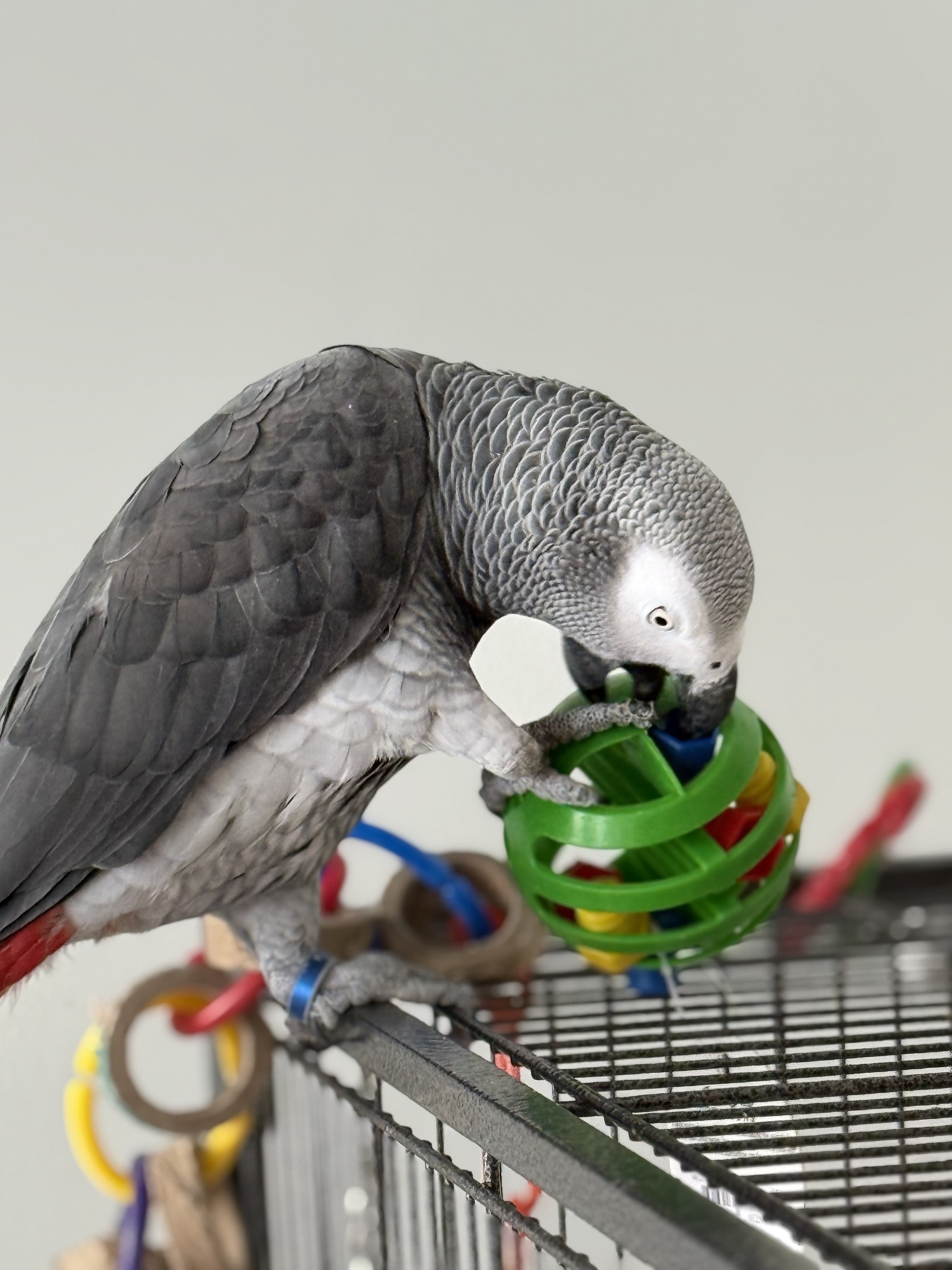
What Science Says About Lifelong Vocal Learning
One of the most searched questions among parrot owners is:
“Is my parrot too old to learn to talk?”
According to modern research in avian cognition, the answer is no.
Age alone does not eliminate a parrot’s ability to learn new vocalizations.
This article explains what science actually says about older parrots, vocal learning, and speech, and why many birds simply haven’t been taught in a way that works for them.
Parrots Are Lifelong Vocal Learners
Parrots belong to a small group of animals known as vocal learners, meaning they can hear sounds and later reproduce them. This ability relies on specialized brain circuits that remain active well beyond early development.
Researchers have found that many parrot species exhibit open-ended vocal learning, meaning they can continue learning and modifying vocalizations throughout life rather than being limited to a short juvenile window.
“Studies of wild birds indicate that parrots can learn vocalizations throughout life… parrots fit the pattern of open-ended vocal learners.”
Evidence That Older Parrots Can Still Learn
Multiple peer-reviewed studies support the idea that adult and older parrots retain vocal plasticity:
A large review in Scientific Reports explains that parrots continue learning new sounds in adulthood, often by replacing or refining vocal elements rather than losing learning ability. Experimental research on budgerigars (a parrot species) demonstrates that older adults can still learn and adapt vocalizations, especially in socially relevant settings.
Leading parrot cognition researcher Dr. Irene Pepperberg has repeatedly emphasized that parrots retain strong learning capacity across their lifespan when exposed to structured input.
Together, these findings confirm that age does not shut down a parrot’s ability to learn sounds or words.
Why Many Older Parrots Haven’t Talked (Yet)
When parrots don’t talk, it is rarely because they are “too old.” More often, it is because they have not received:
consistent repetition clear pronunciation long exposure periods calm, low-pressure learning environments
Background television, occasional word prompting, or emotionally charged repetition does not match how parrots naturally learn vocalizations.
In the wild, parrots learn calls through repetition, predictability, and long-term exposure — the same principles supported by laboratory research on vocal learning.
What Learning Looks Like in Mature Parrots
For older parrots, learning often appears gradual:
soft muttering or whispering syllable practice tonal experimentation repeated attempts at rhythm or cadence
Clear words may take months, but these early behaviors are well-documented precursors to speech in adult parrots.
Even learning one or two new, well-formed vocalizations represents meaningful cognitive learning.
The Role of Structured, Repetitive Listening
Research consistently shows that parrots learn best when exposure is:
repetitive emotionally neutral consistent in pronunciation long enough to allow pattern recognition
Short, frustrated practice sessions are far less effective than extended listening periods where the bird can learn without pressure.
This approach mirrors how parrots naturally acquire flock calls and social sounds.
The Takeaway
✔ Parrots remain capable of vocal learning throughout life
✔ Older parrots are not “too old” to learn
✔ The key factor is how learning is presented, not the bird’s age
The more accurate question is often not:
“Why isn’t my parrot talking?”
but rather:
“Has my parrot ever been taught in a way that supports learning?”
References & Further Reading
Scientific Reports (Nature) — Lifelong vocal learning in parrots
Neuroscience — Vocal plasticity in adult parrots LaFeber / Pepperberg Lab Overview — How parrots learn vocalizations
Encyclopaedia Britannica — Why parrots can talk.
The Next Step
If you’re curious whether structured listening could support your parrot’s learning, consider starting with calm, repetitive, low-pressure exposure designed specifically for parrots — not entertainment clips, not shouted prompts, and not background noise.
Learning is not about age.
It’s about opportunity.
Leave a Reply