
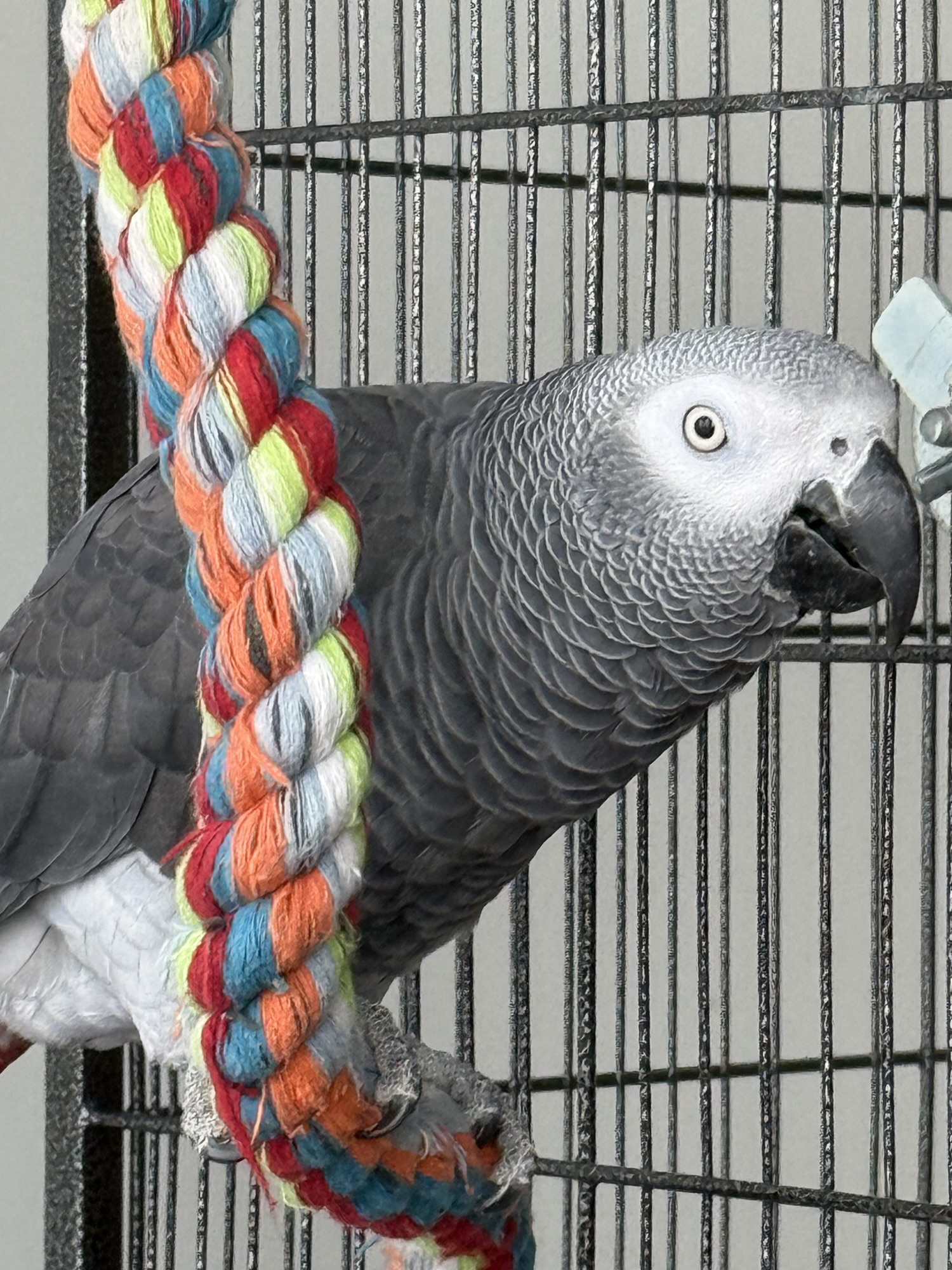
Teaching Your Parrot to Talk Starts With One Simple Idea
Birds learn best from other birds.
Most owners play human voices for their parrots…
but parrots don’t learn speech the way humans do.
They learn speech by listening to:
-
parrot pitch
-
parrot rhythm
-
parrot-length syllables
-
parrot emotional tone
This is why our method — Real Parrots Teach Your Bird to Talk — is so effective.
African Grey Baby Zeus and Ozzie the Indian Ringneck are real parrots teaching your bird in real parrot voices.
Why Real Parrot Voices Work Better Than Human Voices
A parrot’s vocal organ, the syrinx, is completely different from human vocal cords.
Parrots can mimic us, but they learn faster when the model:
-
sounds like them
-
uses their natural pitch
-
matches their timing
-
has the same acoustic texture
Real parrot recordings help your bird:
-
copy clearer
-
stay focused longer
-
avoid frustration
-
learn naturally
Your bird hears, “Oh! That’s my kind of voice!”
And suddenly the learning takes off.
Step 1 — Start With True Beginner Words
Beginner parrots need short, simple, open-vowel words that don’t require lips (birds don’t have them!).
Here are the most successful starter words:
🟢 Easy Starter Words
These words work for African Greys, Ringnecks, Amazons, Cockatoos, Quakers — everyone.
Step 2 — Avoid Hard Words at the Beginning
Some words are too complex for beginners because they contain:
-
lip sounds (p, b, m)
-
blends (br, fr, tr)
-
multiple syllables
These are NOT starter words:
❌ Not Beginner Words
-
Broccoli
-
Brussels sprouts
Your bird can learn them later — especially if they watch Baby Zeus say them — but not at the start.
Step 3 — Use Repetition
The most powerful technique for parrots is repetition.
Say the word many times so your bird can learn it.
This:
-
builds memory
-
teaches rhythm
-
reinforces clarity
-
keeps attention focused
Our training videos already use this method.
Step 4 — Daily Training Makes a Huge Difference
Parrots learn language through consistent exposure.
You don’t need hours a day.
🗓 Simple Daily Schedule
-
Morning: 10–20 minutes (during breakfast)
-
Afternoon: Casual exposure
-
Evening: Calm bonding repetition
Your bird will learn even while playing — they don’t need to stare at the screen.
Step 5 — Praise Every Attempt
Even if it’s unclear or half-formed:
-
tone
-
effort
-
partial syllables
Reward the attempt with:
-
“Good job!!!”
-
treats
-
head scritches
-
excitement
This creates a confident speaker.
Step 6 — Use the Aviary Lexicon as a Learning Tool
The Aviary Lexicon on our website is the first-ever parrot vocabulary dictionary, featuring:
-
every word Baby Zeus says
-
every word Ozzie says
-
video examples
-
real parrot audio
-
context of each phrase
-
training links
Owners can click any word and immediately hear how a real parrot says it.
This is exactly the resource new parrot owners have been waiting for.
Step 7 — Use Real Parrot Training Videos
For beginners, use:
-
Basic Words playlist
-
Cute Words playlist
- Food Words 2 (Contains everything in Food Words plus new food words like kale, corn and thank you and gobble gobble)
These are all designed around:
✔ natural repetition
✔ clear audio
✔ real parrot voices
✔ the correct pacing for bird learning
Final Thoughts
Teaching your parrot to talk is one of the most rewarding experiences in bird ownership.
Your bird CAN learn speech — and they will learn faster when training with:
-
real birds
-
simple words
-
clear repetition
-
consistent exposure
-
positive reinforcement
Baby Zeus and Ozzie are living proof that parrots learn best from parrots. An extra bonus is their voices will help calm your birds so these videos are excellent companions while you have to be away for work, shopping or out to dinner.
Your bird’s first word might be closer than you think.
Leave a Reply